Rogue Pharmacies, Real Consequences: A Definitive Guide to Verifying an Online Pharmacy Before You Buy
The Online Pharmacy Fraud Problem Is Larger Than Most Consumers Realize
The convenience of ordering prescription medications online is real and well-documented. Verified, licensed online pharmacies offer competitive pricing, home delivery, and access to medications that may be difficult to obtain locally. For millions of Americans — particularly those managing chronic conditions, living in rural areas, or operating without comprehensive insurance coverage — online pharmacy access is not merely convenient but genuinely essential.
The problem is that the same digital infrastructure that enables legitimate online pharmacy commerce also enables fraud on a significant scale. The National Association of Boards of Pharmacy (NABP) has estimated that the vast majority of websites selling prescription medications online operate outside applicable laws and regulations. Many of these sites sell counterfeit, subpotent, or entirely mislabeled products. Some collect payment and ship nothing at all. Others harvest financial and personal data for secondary criminal purposes.
Distinguishing the legitimate from the fraudulent is not always intuitive. Sophisticated criminal operations invest heavily in website design, fake customer reviews, and imitation trust signals specifically designed to mislead careful consumers. This guide explains how to see through those deceptions.
Start with Regulatory Verification Tools
The single most reliable first step in evaluating any online pharmacy is checking its standing with official regulatory bodies. Several tools exist specifically for this purpose.
The NABP's VIPPS Program. The Verified Internet Pharmacy Practice Sites (VIPPS) accreditation, administered by the NABP, is the gold standard for online pharmacy verification in the United States. Pharmacies that carry VIPPS accreditation have been independently verified to hold valid state licenses, require valid prescriptions, maintain patient privacy protections, and operate in compliance with applicable federal and state laws. You can search the VIPPS database directly at nabp.pharmacy. If a site claims VIPPS accreditation but does not appear in the official database, treat that claim as fraudulent.
State pharmacy board license verification. Every legitimate pharmacy operating in the United States must hold a valid license from the state pharmacy board in each state where it dispenses medications. Most state pharmacy boards maintain publicly searchable license databases. A legitimate online pharmacy should be able to provide its license number and state of operation, and that information should be verifiable through the relevant board's official website.
The FDA's BeSafeRx resources. The U.S. Food and Drug Administration maintains consumer-facing resources specifically addressing online pharmacy fraud, including guidance on identifying rogue operations and reporting suspected illegal activity. These resources are available at fda.gov and represent an authoritative starting point for any consumer evaluating an unfamiliar pharmacy.
Red Flags in Website Design and Operational Practices
Beyond formal regulatory verification, a careful review of a pharmacy website's design and stated practices can reveal significant warning signs.
No prescription requirement. Any website offering to sell prescription medications without requiring a valid prescription from a licensed U.S. physician is operating illegally. This is not a gray area. Federal law requires a valid prescription for controlled and non-controlled prescription medications alike. Sites that advertise "no prescription needed" or offer online questionnaires as a substitute for a legitimate physician-patient relationship should be avoided without exception.
Prices that defy credibility. Legitimate pharmacies offering competitive pricing can achieve meaningful savings through volume purchasing, reduced overhead, and cash-pay discount structures. However, prices that appear to be seventy or eighty percent below any other available source — including verified discount platforms — are almost certainly a signal of counterfeit or nonexistent product. Fraudulent operations use implausibly low prices as bait precisely because consumers are motivated to find savings.
No verifiable physical address or contact information. A legitimate pharmacy maintains a verifiable physical address and accessible contact information including a working telephone number staffed by licensed pharmacists. Sites that provide only a contact form, a generic email address, or a non-U.S. mailing address should be treated with extreme caution.
Unsolicited email or social media solicitation. Legitimate pharmacies do not typically solicit customers through unsolicited email campaigns or social media advertisements offering steep discounts on specific medications. This approach is a common vector for fraudulent operations targeting patients who have previously searched for specific drug names online.
Poor grammar, inconsistent branding, and generic design. Many fraudulent pharmacy websites are assembled quickly using generic templates, and careful reading often reveals grammatical inconsistencies, mismatched branding elements, or copy that appears to have been translated from another language. These signals do not guarantee fraud, but they warrant additional scrutiny.
How Pharmacy Scams Actually Operate: Documented Patterns
Understanding the operational mechanics of fraudulent pharmacies helps consumers recognize deceptions that might otherwise appear convincing.
The most common model involves a website that accepts payment, ships either nothing or a package containing unmarked pills of unknown composition, and then becomes unreachable when the customer attempts to seek a refund or report the problem. Payment is typically processed through obscure international processors or cryptocurrency channels specifically to complicate chargeback and fraud recovery efforts.
A second common model involves sites that do ship medications — but those medications are counterfeit, subpotent, or entirely different drugs from what was ordered. The patient believes they are managing their condition with a familiar medication when they are in fact receiving an unknown substance. This scenario carries genuine medical risk, particularly for patients managing serious chronic conditions.
A third model focuses on data harvesting rather than medication fraud. These sites collect payment information and prescription history data, then use or sell that data for identity theft and financial fraud purposes. The medication order may be fulfilled in a minimal way to delay the victim's realization that something is wrong.
Protecting Yourself: A Pre-Purchase Checklist
Before completing any purchase from an online pharmacy you have not previously used and verified, work through the following steps.
- Search the NABP's VIPPS database for the pharmacy's name and domain.
- Verify the pharmacy's license through the relevant state board's public database.
- Confirm a working U.S. telephone number and speak with a licensed pharmacist before ordering.
- Verify that a valid prescription is required and that the site does not offer to generate one internally.
- Review the site's privacy policy, return policy, and shipping terms for completeness and clarity.
- Search the pharmacy's name and domain in combination with terms like "scam," "complaint," and "review" to surface any documented consumer complaints.
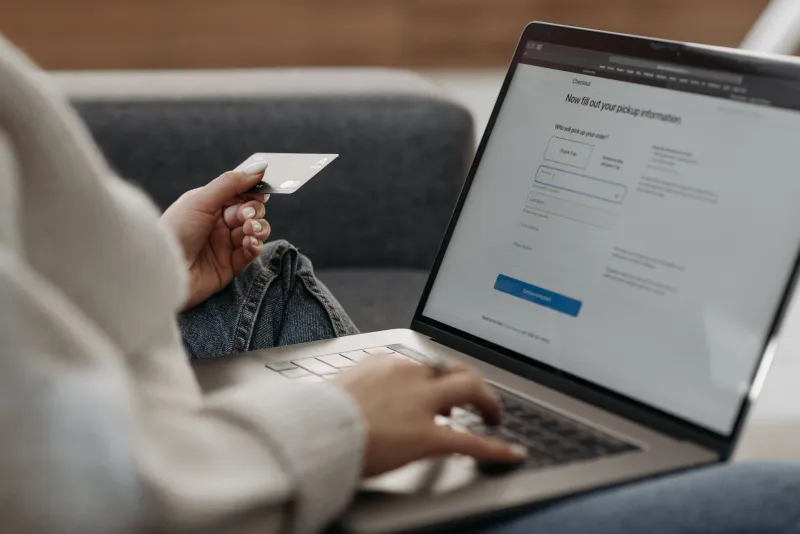
- Confirm that the payment processing page displays a secure connection (https) and is processed through a recognized payment provider.
Legitimate online pharmacies welcome verification inquiries. A pharmacy that is evasive, unresponsive, or dismissive when asked about its licensing status is communicating something important about its operations.
The Value of Doing This Work Upfront
Verification takes time. For patients who are primarily motivated by cost savings, the temptation to skip these steps in favor of the lowest available price is understandable. But the risks of engaging with an unverified pharmacy — financial fraud, receipt of counterfeit medication, identity theft, and genuine health consequences — vastly outweigh the marginal savings any fraudulent operation might appear to offer.
Legitimate, verified online pharmacies can and do offer meaningful cost savings over traditional retail channels. The goal is not to avoid online pharmacy commerce but to ensure that the savings you pursue are real, the medications you receive are genuine, and the operation you are trusting with your health and financial information has earned that trust through verifiable compliance with applicable law.