Prescription Prices Across Borders: A Practical American's Guide to Geographic Medication Cost Differences
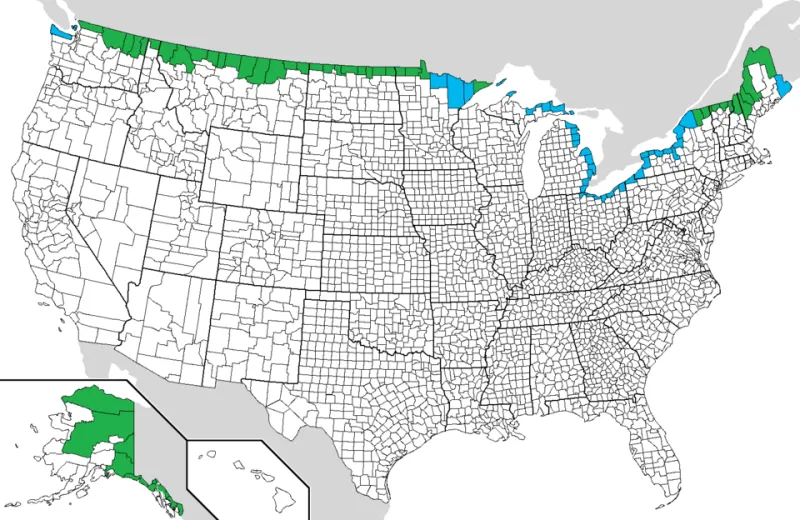
Photo: Noddy, Public domain, via Wikimedia Commons
Imagine paying $300 for a monthly prescription at your local pharmacy, only to discover that the identical medication—same manufacturer, same dosage, same active ingredient—costs $28 at a pharmacy two hours north in Canada. This is not a hypothetical scenario. It is a documented reality experienced by millions of Americans living near international borders, and it raises a fundamental question: why does geography determine the price of medicine?
The answer involves a complex interplay of government regulation, insurance network structures, state-level pharmacy laws, and international pricing agreements. Understanding these mechanisms does not just satisfy intellectual curiosity—it can translate directly into actionable savings for patients across the country.
Why Drug Prices Vary So Dramatically Within the United States
Before examining cross-border differences, it is worth appreciating how significantly prescription costs can vary within the United States itself. A 2022 analysis by the RAND Corporation found that American drug prices are, on average, 2.56 times higher than those in 32 other nations. But even within U.S. borders, the same drug can carry vastly different price tags depending on where you fill it.
Several factors drive intra-national variation:
State Pharmacy Regulations: Each state maintains its own board of pharmacy with distinct rules governing drug substitution, pricing transparency, and pharmacist authority. States such as California and New York have enacted legislation requiring pharmacists to inform patients when a lower-cost equivalent is available. Other states impose no such obligation.
Insurance Network Formularies: A medication that sits on Tier 1 of one insurer's formulary—meaning low copay—may be placed on Tier 3 or Tier 4 by a competing insurer operating in the same state, dramatically increasing out-of-pocket costs. Formulary structures are negotiated privately and vary widely.
340B Drug Pricing Program: Federally qualified health centers, rural hospitals, and certain other safety-net providers participate in the 340B program, which entitles them to purchase outpatient drugs at significantly reduced prices. Patients served by these facilities may access substantially lower costs that are unavailable at commercial chain pharmacies.
Pharmacy Benefit Manager (PBM) Negotiations: The middlemen who negotiate between insurers and drug manufacturers—known as PBMs—wield enormous influence over what patients pay. Their contracts vary by geography, employer, and insurance plan, creating a pricing patchwork that defies easy comparison.
The Canada Question: What Americans Can and Cannot Do
For Americans living near the northern border—particularly in states such as Minnesota, Montana, North Dakota, Michigan, and New York—crossing into Canada to purchase medications has long been an informal cost-containment strategy. The savings can be dramatic. Canada's Patented Medicine Prices Review Board (PMPRB) caps the prices manufacturers can charge, while the government negotiates bulk pricing through provincial formularies.
Common medications for chronic conditions—including treatments for hypertension, diabetes, high cholesterol, and erectile dysfunction—frequently cost 50 to 90 percent less in Canadian pharmacies than at U.S. retail prices.
However, the legal landscape requires careful navigation:
- Personal importation: The FDA technically prohibits the importation of prescription drugs purchased abroad for personal use, but the agency has historically exercised enforcement discretion for individuals importing a 90-day personal supply for a serious condition when no comparable domestic product is available.
- State-level programs: Florida, Colorado, and several other states have pursued or enacted legislation to create state-authorized importation programs sourcing drugs from Canada, though federal approval for these programs has been slow and inconsistent.
- Prescription requirements: Canadian pharmacies legally require a valid prescription. Any online service claiming to dispense Canadian medications without one should be treated as a serious red flag.
Mexico: A Different Set of Considerations
For residents of border states including Texas, Arizona, New Mexico, and California, Mexico represents another geographic option. Mexican pharmacies operate under a different regulatory structure, and many medications that require a prescription in the United States are available over the counter at Mexican pharmacies—including certain antibiotics, hormonal medications, and controlled substances.
While this accessibility may seem appealing, it introduces significant safety considerations:
- The absence of a prescription requirement means no physician oversight of dosage, contraindications, or drug interactions.
- Mexican pharmaceutical manufacturing standards, while regulated by COFEPRIS (the national health regulatory agency), are not equivalent to FDA oversight.
- Returning to the United States with prescription medications purchased in Mexico is subject to U.S. Customs enforcement, and controlled substances cannot be legally imported under any personal-use framework.
For non-controlled, FDA-approved medications purchased in verifiable quantities for personal use, U.S. Customs officers typically apply the same discretionary enforcement posture as with Canadian purchases—but this is not a legal guarantee.
Legitimate Domestic Alternatives Worth Exploring First
Before any patient considers cross-border purchasing, several domestic options may close the cost gap substantially:
Prescription Discount Programs: Services such as GoodRx, RxSaver, and Blink Health negotiate discounted pricing at retail pharmacies nationwide. These programs are free to use and can reduce costs by 80 percent or more on common generics.
Manufacturer Patient Assistance Programs: Most major pharmaceutical manufacturers operate assistance programs for uninsured or underinsured patients who meet income criteria. NeedyMeds.org maintains a searchable database of these programs.
Mail-Order Pharmacies: Many insurance plans offer 90-day mail-order supplies at reduced per-unit costs. For maintenance medications taken long-term, this option frequently delivers meaningful savings without leaving home.
Federally Qualified Health Centers (FQHCs): These community health centers serve patients on a sliding fee scale and often provide access to 340B-discounted medications. HRSA's online locator can identify the nearest facility.
Making an Informed Decision
Geographic price disparities in prescription medications are a structural feature of the American healthcare system, not an anomaly. For patients managing chronic conditions on fixed incomes, these disparities represent a genuine financial burden that demands practical solutions.
At CheapCialisOnlineHQ, we consistently encourage readers to exhaust domestic options—generics, discount programs, assistance programs—before exploring cross-border alternatives. When cross-border purchasing is considered, verifying pharmacy legitimacy, maintaining valid prescriptions, and understanding applicable importation guidelines are non-negotiable steps.
The goal is not simply to spend less. It is to spend less while maintaining the safety and efficacy standards your health deserves.